




This Is How to Get Rid of Toothaches That Keep You Awake at Night
The discomfort of having to get up in the middle of the night because your tooth hurts badly. The constant pain after everyone else has gone home, and it continues to provide sensitivity when trying to eat anything warm. These problems bring many people to our office because they have suffered for several days or longer before getting help to stop the pain from occurring again.
Root canal treatment (RCT) is the procedure used to eliminate the dental pain that occurs as a result of infected or inflamed nerve tissue within your tooth. By completing this step in the procedure, you will not only eliminate the source of your pain, but also seal your tooth off from future infections. Once the infection has been eliminated, you will no longer be in pain, your tooth will be saved, and you will be able to perform all the activities you after the treatment.
At Mohan's Dental Clinic in Kondapur, root canal therapy is performed by a qualified specialist, Endodontist, using the latest technology in root canals - rotary endodontic technology. A majority of the people that we see state that once they actually complete their procedure, they were shocked at how little pain they experienced during the process compared to what they had originally thought would occur.
Signs You May Need Root Canal Treatment
These are the clinical signals that the pulp (the nerve and blood vessel tissue inside the tooth) has been affected by infection or irreversible inflammation:
| 🚨 Emergency Contact Us Today | ⚠️ Book Within 48 Hours |
|---|---|
| •Spontaneous, throbbing toothache especially severe at night | •Prolonged sensitivity to heat that lingers after the stimulus is removed |
Important: A tooth that needs root canal treatment will not improve on its own. The infection progresses, the pain worsens, and the risk of the infection spreading beyond the tooth increases with every day of delay. If you recognise any of these signs, contact us today.
What exactly is Root Canal Treatment? A Clear Explanation
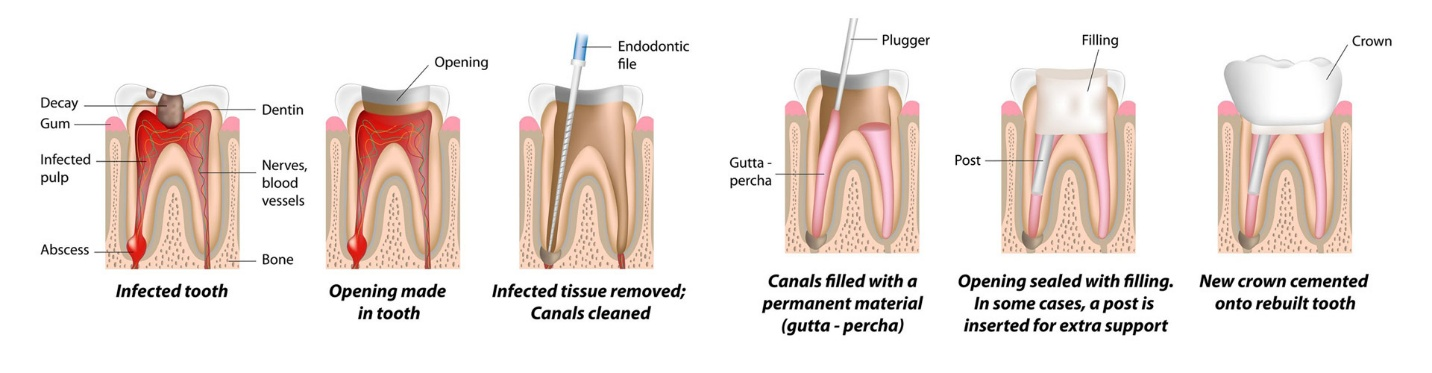
Inside every tooth, running from the crown down through the roots, are narrow channels called root canals. These canals contain the dental pulp, a soft tissue made up of nerves, blood vessels, and connective tissue that nourished the tooth during its development.
When bacteria penetrate deep into the tooth through a cavity, crack, or failed restoration, they infect the pulp. The immune response to this infection, inflammation, pressure, and swelling creates the characteristic throbbing pain of a dental abscess. Because the pulp is enclosed in a rigid space, this pressure has nowhere to go and intensifies over time.
Root canal treatment removes the infected pulp tissue entirely. The now-empty root canals are cleaned, shaped, and disinfected using specialised instruments. They are then filled and sealed with a biocompatible material called gutta-percha, and the tooth is restored with a crown. The tooth remains functional but the source of infection and pain is permanently eliminated.
Root Canal Treatment is Not What You Think It Is: The Myths Debunked
The reputation of root canal treatment as a painful, traumatic procedure is one of the most outdated and damaging perceptions in all of dentistry. It is based on experiences from decades ago. Modern RCT is a fundamentally different procedure.
| ❌ MYTH | ✅ FACT |
|---|---|
| ❌ MYTH | ✅ FACT |
| ❌ MYTH | ✅ FACT |
| ❌ MYTH | ✅ FACT |
| ❌ MYTH | ✅ FACT |
The Root Canal Procedure at Mohan Dental Clinic Step by Step
Here is exactly what happens during a root canal treatment appointment with our specialist endodontist:
Step 1 Diagnosis Digital X-rays & Clinical Assessment
Periapical X-rays provide a precise view of the tooth anatomy, root length, number of canals, and extent of periapical (bone) changes caused by infection. The tooth is tested for vitality and percussion sensitivity. This diagnostic stage ensures complete clarity before treatment begins.
Step 2 Local Anaesthesia Complete, Comfortable Numbing
Topical anaesthetic gel is applied to the gum before the injection to minimise any sensation from the needle. We use highly effective local anaesthetic and ensure complete pulpal anaesthesia before proceeding. Supplemental anaesthesia is available for teeth that are initially difficult to anaesthetise due to infection related acidity changes.
Step 3 Rubber Dam Isolation - (when needed in certain conditions)
A rubber dam a thin sheet of latex or latex free material is placed around the tooth to isolate it completely from saliva and oral bacteria. This is a standard of care in endodontics that improves procedural cleanliness, protects against instrument aspiration, and reduces reinfection risk. It makes the experience more comfortable for you too. Provided people wants the treatment to be done in this protocol.
Step 4 Rotary Endodontics Canal Cleaning & Shaping
Using NiTi (nickeltitanium) rotary files flexible, motor driven instruments that navigate the curved anatomy of root canals far more efficiently and with greater safety than older hand files the canals are progressively cleaned and shaped to remove all infected pulp tissue and create a pathway for disinfection and obturation. This step is the clinical core of root canal treatment.
Step 5 Irrigation & Disinfection
The canals are copiously flushed with sodium hypochlorite and EDTA solutions that dissolve organic debris and disinfect the canal walls and dentinal tubules. This chemical disinfection step is essential to eliminating bacteria that mechanical instrumentation alone cannot reach.
Step 6 Obturation Canal Sealing
The cleaned, shaped canals are filled and sealed with gutta percha (a biocompatible rubberlike material) and a sealer cement. This three dimensional seal prevents bacteria from re-entering the canals or migrating towards the periapical tissue. Obturation is confirmed radiographically.
Step 7 Post Treatment Restoration Crown Placement (CRITICAL)
A root canal treated tooth is structurally compromised and brittle. A dental crown is placed over the tooth to protect it from fracture, restore full biting function, and seal the access cavity completely. Crown placement is not optional it is the step that determines whether your root canal treatment succeeds long term.
Appointment time: 60 to 90 minutes for a single visit RCT. For complex multi rooted teeth, a second visit may be needed.
Why a Crown after Root Canal Treatment is Non Negotiable?
This section exists because it is one of the most clinically important conversations we have with people and one of the most commonly misunderstood.
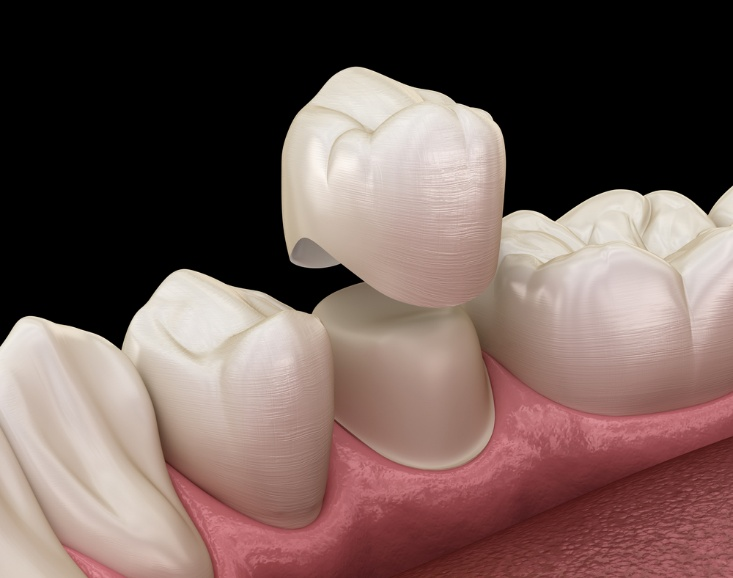
The single most common reason root canal treated teeth fail is fracture not inadequate root canal treatment.
When the pulp is removed from a tooth, the tooth loses its internal moisture supply and becomes more brittle. The access cavity created during RCT further weakens the crown of the tooth. Without a crown, the tooth will eventually fracture under biting forces often along the root, making the fracture unrestorable and the tooth unsalvageable.
A crown placed over the root canal treated tooth:
- Protects the tooth from fracture by encasing the remaining structure
- Seals the access cavity completely against bacterial re-entry
- Restores full biting and chewing function to the tooth
- Maintains the tooth’s position in the arch and prevents drift
- Gives the root canal treatment the best possible chance of long term success
We strongly recommend that all root canal treated posterior teeth (premolars and molars) receive a crown within 4 to 6 weeks of completing the root canal. For anterior teeth, a crown or composite build up is advised based on the extent of remaining tooth structure.
For full details on crown options including zirconia, ceramic, and PFM, explore our Dental Crowns
Single Visit Root Canal Treatment Is It Right for You?
Single visit RCT completing the entire root canal procedure in one appointment has become the standard of care for most cases at specialist led clinics worldwide. Our endodontist performs single visit RCT wherever it is clinically appropriate.
| ✅ Single Visit RCT Suitable When: | ⚠️ Multi Visit Preferred When: |
|---|---|
| •No active acute abscess or swelling present | •Active acute abscess with significant swelling requiring drainage |
Benefits of single visit RCT when appropriate: One appointment, one dose of local anaesthesia, no temporary filling period, no risk of temporary seal failure between appointments, and faster resolution of your symptoms. For busy professionals in Kondapur and Hitech City, completing RCT in a single lunchbreak length visit is a significant practical advantage.
The decision between single and multi-visit is made by our endodontist at your examination based on clinical findings not for convenience.
Rotary Endodontics Why It Changes the Experience
The use of motorised rotary NiTi (nickel titanium) files represents one of the most significant advances in endodontic technique. Here is how it benefits you directly:
- Faster and more efficient: Rotary files clean and shape canals significantly faster than hand filing, reducing treatment time and your time in the chair
- More precise canal shaping: The flexibility of NiTi files allows them to follow the natural curvature of root canals without straightening, perforating, or creating ledges that older stainless steel hand files sometimes caused
- Less vibration and noise: The motorised, controlled motion of rotary instruments creates less vibration and a smoother experience compared to the repeated push pull of manual filing
- Better cleaning outcomes: Consistently shaped canals allow more effective irrigation reach and more predictable obturation improving the long term success of the root canal
- Reduced procedural errors: Rotary systems with built in torque control auto stop before file fracture risk is reached, improving procedural safety in complex anatomy
Filling or Root Canal? How We Determine What You Need
The most important clinical question in restorative dentistry is whether a tooth can be saved with a filling or requires root canal treatment. Here is the clear diagnostic framework:
| Clinical Finding | ✅ Filling Sufficient | 🔴 Root Canal Required |
|---|---|---|
| Pain type | Mild, brief sensitivity to cold/sweet; resolves quickly | Spontaneous, throbbing, prolonged pain; night pain |
| Heat response | Mild sensitivity that resolves | Pain worsened by heat; pain lingers long after heat removed |
| X-ray appearance | Decay away from pulp; no periapical changes | Decay at/into pulp; periapical radiolucency (bone change) |
| Swelling / abscess | None | Facial swelling, gum abscess, or pus discharge |
| Percussion test | No significant pain on tapping | Percussion sensitivity pain when tooth is tapped |
| Tooth colour | Normal colour | Tooth appears dark, grey, or significantly discoloured |
| Pulp test response | Normal vital response | No response (necrotic) or severely abnormal response |
For detailed information on dental fillings and when they are the right solution, explore our Dental Fillings
Treatment by a Specialist Endodontist Why It Matters
Not all root canal treatments are the same. The clinical outcome depends heavily on the experience, training, and equipment of the treating dentist. At Mohan Dental Clinic, root canal treatment is led by a specialist endodontist a dentist who has completed additional years of postgraduate training specifically in root canal procedures.
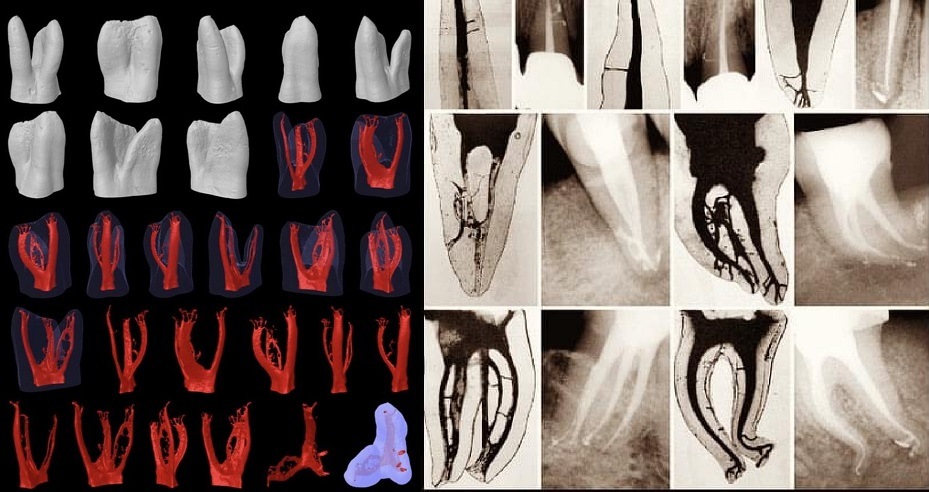
- Complex anatomy: Upper molars typically have 3 to 4 canals; lower molars can have 5 or more. Specialist training prepares endodontists to find, negotiate, and treat all canals missed canals are a leading cause of RCT failure
- Difficult cases: Calcified canals, curved roots, retreatment of failed previous RCTs, and cases with anatomical variations all benefit from specialist expertise
- Diagnostic precision: Specialist assessment of periapical pathology, prognosis, and the decision between root canal, retreatment, and extraction requires clinical experience that generalist training cannot fully replicate
- Reduced complication risk: Procedural errors file fracture, perforation, ledge formation are significantly less frequent with specialist level training and equipment
Root Canal Treatment Cost in Kondapur, Hyderabad
We believe in complete pricing transparency. Here is a clear breakdown of RCT costs at Mohan Dental Clinic:
| Treatment / Tooth Type | Cost Range (Per Tooth) | Notes |
|---|---|---|
| Anterior teeth (incisors, canines) 1 canal | ₹8,000 | Simpler anatomy; usually 1 root canal |
| Premolars 1 to 2 canals | ₹8,000 - ₹9,000 | Variable anatomy; 1 to 2 canals |
| Molars 3 to 4 canals | ₹9,000 - ₹12,000 | Most complex; 3 to 4+ canals; specialist approach required |
| Retreatment (failed previous RCT) | ₹10,000 - ₹14,000 | Removal of existing filling material; specialist procedure |
| Crown after RCT (Zirconia recommended) | ₹10,000 - ₹25,000 | Essential completion; see Dental Crowns page for full options |
| Crown after RCT (PFM/ DMLS economical option) | ₹6,000 - ₹8,500 | Back teeth where aesthetics are less critical |
Total investment for RCT + Crown: ₹18,000 to ₹37,000 depending on tooth type and crown material selected. This is the complete, permanent restoration of your tooth. Compare this to a dental implant (₹40,000 to ₹80,000+) for the same tooth after extraction RCT is consistently the more economical long term outcome.
A detailed, itemised cost estimate is provided before treatment begins. No surprises at checkout.
Why Choose Mohan Dental Clinic in Kondapur for Root Canal Treatment?
| Differentiator | What It Means for You |
|---|---|
| Specialist Endodontist | RCT performed by a dentist with specialist postgraduate endodontic training, not a general dentist. Higher success rates, fewer complications, better outcomes for complex cases. |
| Rotary Endodontics | Motorised NiTi rotary files provide faster, more precise canal cleaning and shaping than hand files. Better clinical outcomes, less time in the chair. |
| Rubber Dam Isolation | Standard of care in endodontics. Keeps the field clean, reduces reinfection risk, improves patient comfort, and prevents instrument ingestion. |
| Single Visit Option | Most cases completed in one appointment of 60 to 90 minutes. No temporary filling period. Immediate pain resolution. Designed for busy professional schedules. |
| Digital Periapical X-rays | Precise imaging of root length, canal anatomy, and periapical pathology. Lower radiation than conventional film X-rays. Taken and reviewed within seconds. |
| Painless Protocol | Topical gel before injection. local anaesthetic for reliable pulpal anaesthesia. Supplemental techniques for difficult to anaesthetise teeth. |
| Crown Counselling Included | We do not complete root canal treatment without explaining the critical importance of crown placement. Full crown options, materials, and costs are discussed at the same appointment. |
| 4.8★ Patient Trust | Our rating across 1,000+ people reflects consistent, quality endodontic care. Real patient outcomes. Real long term results. |
Related Treatments at Mohan Dental Clinic
→ Dental Crowns (Zirconia, Ceramic, PFM) in Kondapur)
→ Dental Fillings When Filling is Enough
→ Tooth Extraction When RCT is Not Possible
→ Dental Implants After Tooth Loss
FAQs
Is root canal treatment painful?
No and this is the most important thing to understand. Root canal treatment is performed under local anaesthesia, which numbs the tooth and surrounding area completely before any instruments are used. During the procedure you feel pressure and vibration, not pain. The treatment resolves the pain of infection it does not cause pain. The vast majority of people find the experience significantly less uncomfortable than the toothache that brought them in. Most people tell us they wish they had come sooner.
How long does root canal treatment take?
For most single rooted anterior teeth, 45 to 60 minutes. For molars with multiple canals, 60 to 90 minutes. With rotary endodontics and our single visit protocol, the majority of root canal treatments at Mohan Dental Clinic are completed in one appointment. Complex cases involving retreatment or severe infection may require multiple visits. We give you a realistic time estimate at examination.
Can I go to work after root canal treatment?
Yes, in most cases. The local anaesthetic will wear off over 2 to 4 hours after the appointment. Some people experience mild soreness or sensitivity for 2 to 3 days after RCT as the periapical tissues heal this is manageable with standard over-the-counter pain relief. Most people in our Kondapur and Hitech City patient base return to work the same day or the following day. We advise against any heavy physical activity or alcohol on the day of treatment.
Do I definitely need a crown after root canal?
For all posterior teeth (premolars and molars), yes a crown is strongly recommended and we will always advocate for it. Root canal treated posterior teeth bear significant biting forces and are at high risk of catastrophic fracture without crown coverage. The most common reason root canal treated teeth fail over time is not inadequate endodontic treatment but tooth fracture from lack of crown protection. For anterior teeth, the decision depends on the amount of remaining tooth structure your endodontist will advise at your appointment.
Can root canal treatment fail?
All dental procedures have a possibility of failure, and RCT is no different. Success rates for root canal treatment are 85 to 95% at 10 years when performed correctly and followed by adequate crown restoration. Factors that reduce success include missed canals, incomplete obturation, and tooth fracture from unprotected loading. When root canal treatment does fail, retreatment by a specialist is the first option before extraction is considered.
What is root canal retreatment?
Root canal retreatment is the procedure performed when a previously treated tooth develops new or persisting infection. The existing root filling material is removed, the canals are recleaned and reshaped to a higher standard, and the tooth is re obturated. Retreatment is more complex than initial RCT and is best performed by a specialist endodontist. It has good success rates and is far preferable to extraction in most cases.
If the tooth is dead, why does it still need treatment?
A ‘dead’ tooth (one with a necrotic or non-vital pulp) no longer hurts in the way an acutely inflamed vital tooth does but the bacteria inside it continue to proliferate and infect the surrounding bone. This periapical infection can cause bone destruction, abscess formation, swelling, and spread to adjacent teeth. Root canal treatment is needed to eliminate this ongoing bacterial source regardless of whether the tooth is currently causing pain.
Is it safe to delay root canal treatment if the pain has stopped?
No and this is a very common and potentially serious mistake. Pain often stops when the nerve tissue dies but the infection does not stop. It simply progresses silently into the surrounding bone. People who delay after the pain subsides often present later with significant bone loss, abscess, or a tooth that has become unrestorable. If you have been told you need a root canal, the time to do it is now not when the pain returns.